
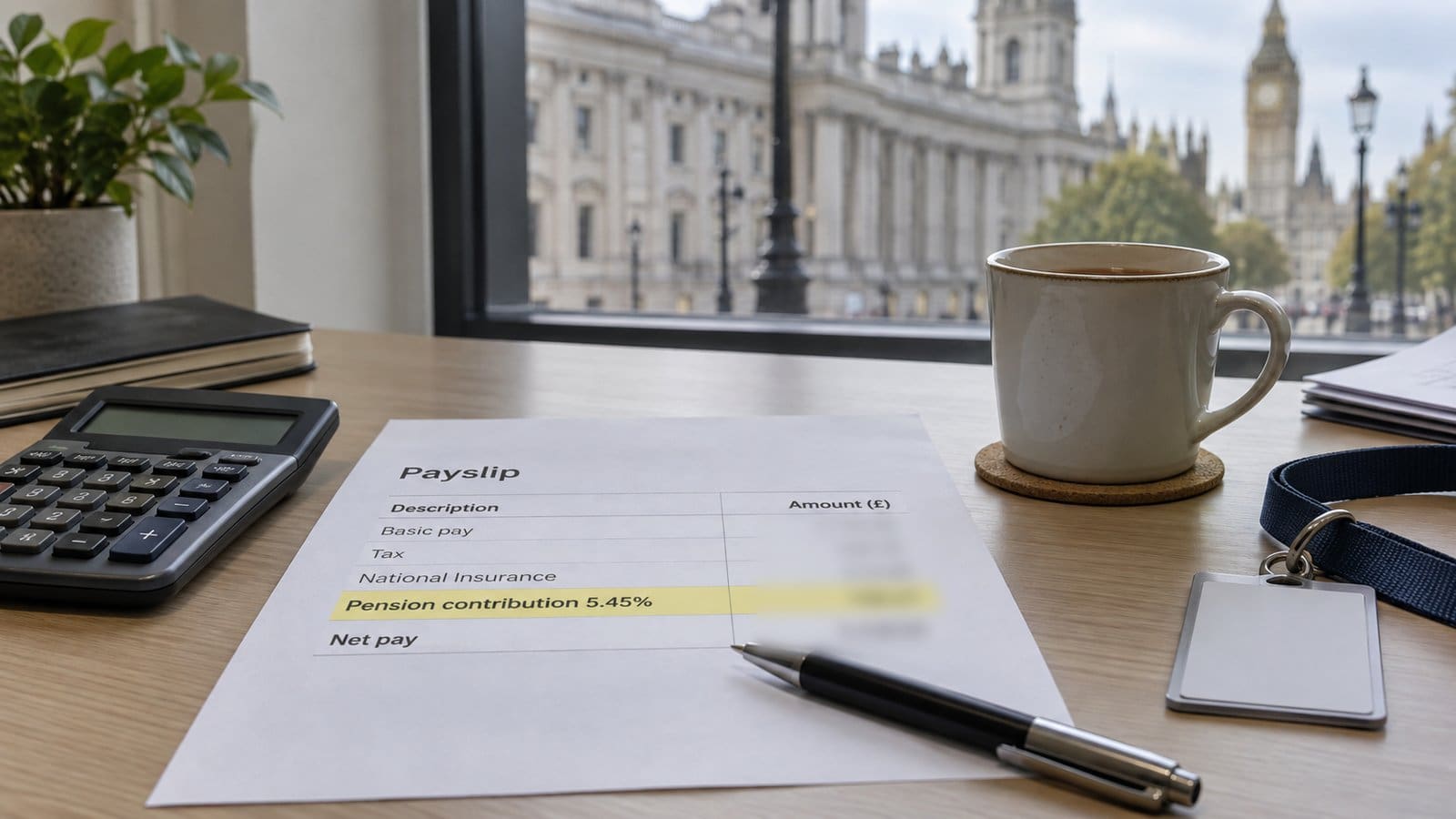
If you work for the Civil Service, your pension contribution comes out of every payslip at one of four rates: 4.6%, 5.45%, 7.35% or 8.05%. The Civil Service pension contribution rates for 2026/27 depend on your pensionable earnings, and the same four apply whether you’re in alpha or still hold benefits in classic, classic plus, premium or nuvos.
The rates themselves haven’t moved for 2026/27. The bottom threshold has, so some people on around £35,000 to £36,000 now pay the lower rate. And your employer’s share is about to fall sharply, from 28.97% to 22.32% in April 2027. This page sets out the rates, works out what you pay, and explains what changes next year. For how the scheme itself works, see our Civil Service pension guide.
In short
- Four member rates for 2026/27: 4.6% up to £36,199, 5.45% from £36,200 to £56,000, 7.35% from £56,001 to £150,000, and 8.05% above £150,000.
- The rates are unchanged. Only the lowest threshold moved, up from £34,799, so some members pay less than last year.
- The rate applies to your whole pay, not just the part above a threshold. Crossing a threshold by £1 moves all of your pay to the higher rate.
- Your employer pays 28.97% on top until 31 March 2027, then 22.32%. That changes neither your pension nor what you pay.
- Contributions come off before tax, so you get full income tax relief automatically.
- Pensions in payment rose 3.8% in April 2026. The April 2027 increase will be set by September’s inflation figure, published on 21 October 2026.
What are the Civil Service pension contribution rates for 2026/27?
These are the member rates from 1 April 2026, as published by the Civil Service Pension Scheme. The scheme says they apply to members of “the classic, classic plus, premium, nuvos and alpha pension schemes”.
| Annual pensionable earnings | Contribution rate |
|---|---|
| £0 to £36,199 | 4.6% |
| £36,200 to £56,000 | 5.45% |
| £56,001 to £150,000 | 7.35% |
| £150,001 and above | 8.05% |
The employer notice for 2026/27 confirms that “member contribution rates remain unchanged” and that the new thresholds apply from 1 April 2026 (Member Contributions for the 2026/27 Scheme Year).
Calculate your Civil Service pension contribution
The table gives you the bands. The calculator gives you the pounds. Enter your annual pensionable earnings and it shows your rate, and what you and your employer each pay in for 2026/27. It’s a figures tool, not advice.
Interactive calculator
Your 2026/27 Civil Service pension contribution
Enter your annual pensionable earnings to see your rate, and what you and your employer each pay in.
Use your annual pensionable pay for the job. If you work part-time, use what you actually earn, and check your payslip for the rate you pay.
Enter a figure above to see your 2026/27 rate and contribution.
Figures use the 2026/27 bands (effective 1 April 2026), before tax relief, rounded to the nearest pound. The same rates apply in classic, classic plus, premium, nuvos and alpha. The 28.97% employer rate applies until 31 March 2027 and falls to 22.32% from 1 April 2027. This is an information tool, not financial advice. Your payslip shows your exact deduction.
How the rates work, and where the cliff edges are
The rate you pay applies to all of your pensionable earnings, not just the slice above a threshold. Income tax doesn't work that way, and the difference creates small cliff edges at each threshold.
Take the bottom one. On £36,199 you pay 4.6%, which is £1,665 a year. On £36,200 you pay 5.45% on everything, which is £1,973. One pound more in pay costs about £308 more in contributions. The step at the next threshold is bigger: £3,052 a year on £56,000, and £4,116 on £56,001.
Two things soften that. Contributions come off before tax, so the real cost is lower than it looks. And the pension you build in alpha depends on your earnings, not your contribution rate, so a higher rate doesn't buy a bigger pension. It's a higher charge for the same benefit.
Does it matter which scheme I am in?
Not for the rate. The same four bands apply across classic, classic plus, premium, nuvos and alpha. What differs is what you build: since April 2022 every active member builds pension in alpha, whatever scheme they started in. If you're in the partnership pension account instead, you don't have to pay anything at all (more on that below).
If you work part-time
The employer notice sets your band on your "annualised rate of pensionable earnings". The scheme's employer guidance has said this means your actual part-time pay, not the full-time equivalent. So someone on a £48,000 full-time salary who works three days a week earns £28,800, and pays 4.6% rather than 5.45%. That guidance is no longer on the scheme's current website, so check your payslip, which shows the rate you're actually paying.
What changed from 2025/26?
The four rates are the same as last year. The only change is at the bottom, where the top of the lowest band rose from £34,799 to £36,199. The employer notice says the lower thresholds now rise each April in line with the Consumer Prices Index from the previous September, following a consultation with member representatives.
The scheme publishes the history of that lowest threshold. It has risen every year since 2022/23:
| Scheme year | Top of the 4.6% band |
|---|---|
| 2022/23 | £23,100 |
| 2023/24 | £32,000 |
| 2024/25 | £34,199 |
| 2025/26 | £34,799 |
| 2026/27 | £36,199 |
The upper thresholds, £56,000 and £150,000, haven't moved in any of those years, so pay rises gradually push people over them.
Civil Service employer contributions: 28.97% now, 22.32% from April 2027
Your employer pays a separate contribution on top of yours. For 1 April 2024 to 31 March 2027 it is a single rate of 28.97% of pensionable pay at every salary level, according to the scheme's employer contribution rates page. Before April 2024 it was banded, from 26.6% to 30.3%.
From 1 April 2027 it falls to 22.32%. The Government Actuary's Department set that in the 2024 valuation of the scheme, published on 23 June 2026: an employer rate of 22.1% of pensionable pay from 1 April 2027 to 31 March 2031, plus an administration levy of 0.22%. The same report found no overall breach of the cost control mechanism, so members' benefits and contributions don't change as a result.
The fall doesn't reduce your pension. Alpha is a defined benefit scheme, so your pension comes from a formula in the rules, not from what your employer pays in. We explain why the rate is falling, and what it means for other schemes, in our guide to the 2027 employer contribution fall.
Do I get tax relief on my contributions?
Yes, in full, and without doing anything. In the scheme's words: "Your employer takes your contributions from your pay before working out the tax, so you will automatically receive full income tax relief." (alpha, your pension and tax). The relief is subject to HMRC limits, and it covers income tax, not National Insurance.
What your contributions buy
In alpha, each scheme year adds 2.32% of your pensionable earnings to your pension. While you're working, that pension is revalued each year in line with prices: the Public Service Pensions Revaluation Order 2026 set the increase in prices for 2025/26 at 3.8%.
A worked example. On £40,000 you're in the 5.45% band, so you pay £2,180 a year, about £182 a month. Your employer adds £11,588 at 28.97%. That year adds £928 a year to your alpha pension, payable for life from your normal pension age and increased with prices. If you pay income tax at 20%, relief brings your own cost down to about £1,744.
Buying more: added pension
You can buy extra pension on top of what you build. New added pension contracts can only be started in alpha; the scheme says members "can no longer start new added pension contracts in classic, premium, classic plus, or nuvos". The most you can buy in alpha in 2026/27 is £9,600 a year of extra pension, and that limit may be lower if you're also buying Effective Pension Age.
The partnership pension account
The partnership pension account is the scheme's defined contribution option, an alternative to alpha. You do not have to pay anything in yourself. Your employer pays in a percentage of your pensionable earnings that depends on your age at the last 6 April:
| Age at the last 6 April | Employer contribution |
|---|---|
| Under 31 | 8% |
| 31 to 35 | 9% |
| 36 to 40 | 11% |
| 41 to 45 | 13.5% |
| 46 and over | 14.75% |
These rates, from the scheme's employer contribution rates page, have applied since 1 October 2015, and the scheme says there are no changes at this time. Employers also pay a separate 0.5% charge, which the scheme calls a mini-ASLC, regardless of salary.
Will my Civil Service pension increase in 2027?
If your pension is already being paid, or you've left with a deferred pension, it goes up each April under the Pensions Increase rules. The scheme uses "the Consumer Prices Index (CPI) to September of the previous year". For April 2026 that meant 3.8%, applied from 6 April 2026 (Pensions Increase).
The April 2027 increase will be set the same way, by the Consumer Prices Index for the year to September 2026. The Office for National Statistics publishes that figure on 21 October 2026 (ONS, Consumer price inflation). If prices haven't risen, the scheme says no increase is applied.
Opting out
You can leave the scheme by completing an opt-out form and returning it to your employer (opting out). You lose the pension you would have built and your employer's contribution. The scheme also says "your employer will have to automatically put you back into a pension scheme every three years", under the automatic enrolment rules.
Common questions
What are the Civil Service pension contribution rates for 2026/27?
4.6% on pensionable earnings up to £36,199, 5.45% from £36,200 to £56,000, 7.35% from £56,001 to £150,000 and 8.05% above £150,000. They apply from 1 April 2026.
Do classic and alpha members pay the same rate?
Yes. The scheme publishes one table for classic, classic plus, premium, nuvos and alpha members. Partnership pension account members don't have to contribute.
Is my rate based on my part-time pay or the full-time salary?
The employer notice sets the rate on your annualised pensionable earnings, and the scheme's employer guidance has said this means your actual part-time pay. Your payslip shows the rate you pay.
Why is the employer contribution falling in 2027?
The 2024 valuation of the scheme set a lower employer rate of 22.32% from 1 April 2027, down from 28.97%. It doesn't change your pension or your own contribution rate.
Do I get tax relief on my Civil Service pension contributions?
Yes. Your employer deducts contributions before working out your income tax, so you get full relief automatically, within HMRC limits.
How much will my Civil Service pension increase in April 2027?
It will match the Consumer Prices Index for the year to September 2026, which the ONS publishes on 21 October 2026. In April 2026 the increase was 3.8%.
Pension Plain's take
The quirk worth understanding is the cliff edge, especially at £56,000, where a small pay rise can cost over £1,000 a year in extra contributions without adding a penny to the pension. The direction of travel matters too: the lowest threshold now rises with inflation each year while the upper ones stay frozen, so more people drift into the higher bands as the years go by. None of that changes the deal itself: a guaranteed, inflation-linked pension that your employer pays most of.
This article is general information about Civil Service pension contributions for the 2026/27 scheme year. It is not financial advice, and your own contributions depend on your pensionable earnings, working pattern and scheme membership. For your personal figures, check your payslip or contact the scheme administrator. For free guidance, MoneyHelper can help; for regulated advice, speak to a financial adviser authorised by the Financial Conduct Authority. This is information, not advice. Pension Plain is not authorised or regulated by the FCA.
Key official sources used
- Civil Service Pension Scheme, Contribution rates
- Civil Service Pension Scheme, Member Contributions for the 2026/27 Scheme Year
- Civil Service Pension Scheme, Employer Contribution Rates
- Civil Service Pension Scheme, alpha: your pension and tax
- Government Actuary's Department, Civil Service Pension Scheme 2024 valuation results (PDF)
- The Public Service Pensions Revaluation Order 2026
- Civil Service Pension Scheme, Pensions Increase
- Civil Service Pension Scheme, Added pension
- ONS, Consumer price inflation
Fact-checked 23 September 2026