
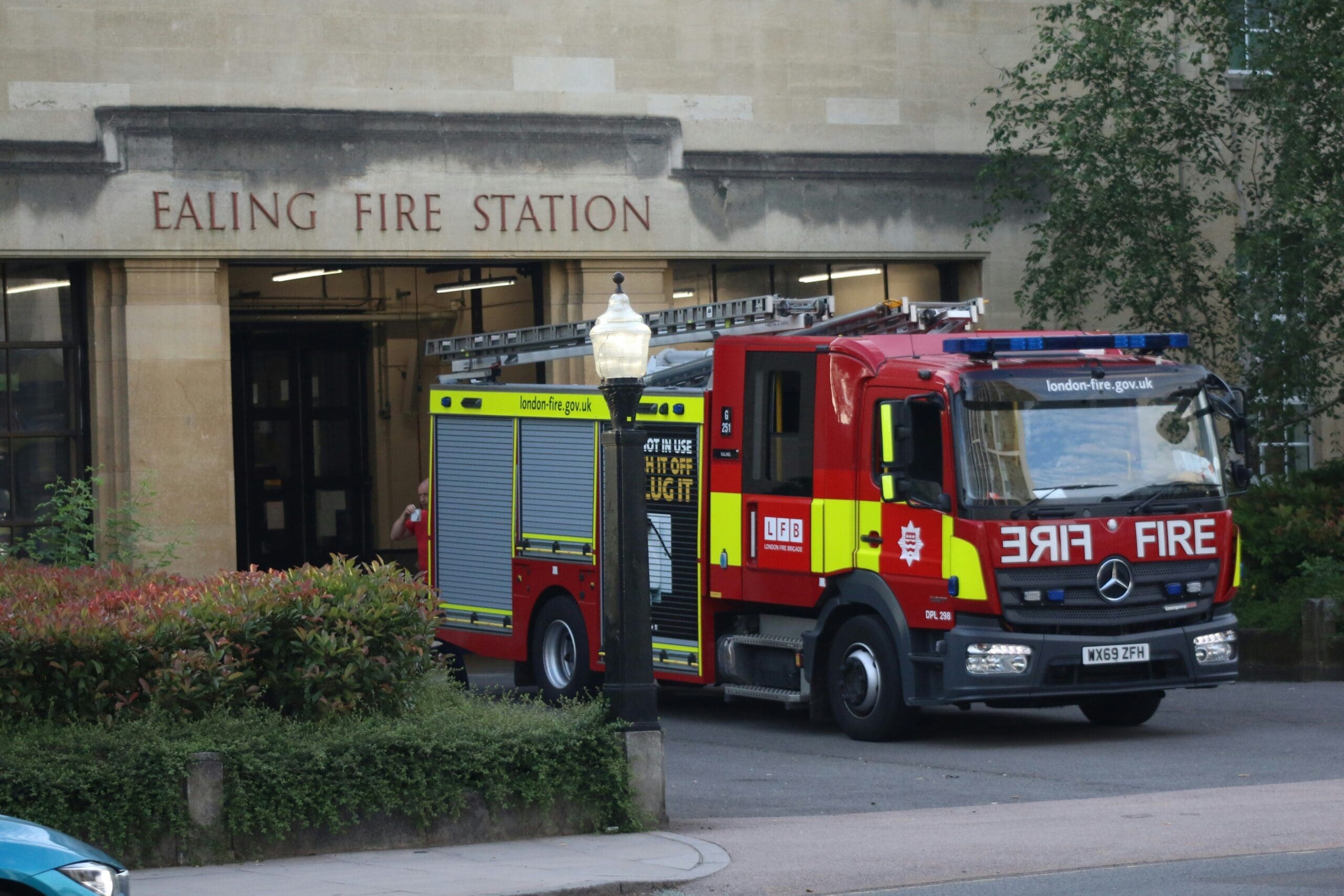
On 1 April 2026, every active firefighter in England switched to a new five-tier contribution structure paying between 11.09% and 17.09% of pensionable pay. That was the visible change. The less visible one, which actually matters more for some members, is that contributions are now based on your actual pensionable pay rather than the whole-time-equivalent your role would attract if you worked full-time. For retained firefighters and part-timers, that’s a meaningful reduction. For senior officers on £80,000 plus, it’s a meaningful increase.
That’s the most recent twist in what’s already the most fragmented pension landscape in the UK public sector. Most schemes have one set of rules. Firefighters have four. Most public sector pensions have a single national administrator. Firefighters in England have 44, one for each fire and rescue authority, and most of them outsource the actual work to one of half a dozen third-party providers. Whether you eventually retire on £15,000 a year or £35,000 a year depends as much on which combination of those four schemes covers your service as it does on rank or years served.
What this page covers
- Does: Explain how the scheme works in plain English, with current rates, terms and rules.
- Doesn’t: Tell you what to choose. Pension decisions depend on your circumstances and need a regulated adviser.
- If you need advice: Speak to a regulated financial adviser, or contact MoneyHelper for free guidance.
In short
- Four firefighter pension schemes still affect benefits being paid today: FPS 1992, FPS 2006 (standard), FPS 2006 Special (the modified scheme for retained firefighters), and FPS 2015. Since 1 April 2022 only FPS 2015 is open for new accrual.
- FPS 2015 is a CARE (career average) scheme building up 1/59.7 of pensionable pay each year, revalued by Average Weekly Earnings while you’re active. Normal Pension Age 60.
- From 1 April 2026, member contributions in England are five tiers between 11.09% and 17.09%, assessed on actual pay. Wales, Scotland and Northern Ireland set their own rates separately.
- Two remedies are running in parallel. Sargeant (the firefighter version of McCloud) gives anyone in service before April 2012 a choice between legacy and reformed scheme benefits for 2015 to 2022. Matthews lets eligible retained firefighters buy historical pre-2006 service into the modified scheme, second options exercise extended to 31 March 2027.
- Ill-health retirement is two-tier in all schemes, lower tier for permanent disablement from the firefighter role, higher tier when you can’t do any regular work either. Five years’ service for higher tier; two or three years for lower tier depending on scheme.
- Injuries on duty are dealt with separately by the Firefighters’ Compensation Scheme, not the pension scheme. It pays a non-taxable injury pension and lump-sum gratuity, scaled by degree of disablement, even to people who aren’t pension scheme members.
Why firefighter pensions are this complicated
The four-scheme situation isn’t the result of bad design. It’s the result of three reform waves stacked on top of each other, plus a major court case that forced a retrospective fix.
The Firefighters’ Pension Scheme 1992 was the original, a final-salary scheme with the most generous terms of any UK public sector pension still in payment. Then came reform: in 2006 a new scheme replaced it for new joiners, with a higher pension age and lower contributions. In 2014, retained firefighters won a long-running legal battle (the Matthews case) that forced the government to bolt 1992-style terms back into the 2006 scheme for retained firefighters retrospectively, creating the FPS 2006 Special section. Then in 2015, the Hutton-driven public sector reforms moved everyone to a career-average scheme, FPS 2015, with transitional protection for older members. Those age-based protections were ruled unlawful in the 2018 McCloud/Sargeant judgment, forcing yet another remedy.
The result is a system where if you joined as a firefighter in 1995 and you’re still serving, you’ve been a member of FPS 1992 (until 2015), then FPS 2015 (from 2015), and the 2018 court ruling means you’re now treated as if you stayed in FPS 1992 for 2015 to 2022 with a choice at retirement about which scheme to take for those seven years. If you joined as a retained firefighter in 2003, you might have a Matthews entitlement to buy back service in the modified FPS 2006 scheme that didn’t exist until 2014. Neither of these is unusual, they’re typical patterns.
The four schemes at a glance
Here’s how the four schemes compare on the parts that matter most for retirement planning. Note that contributions for FPS 1992, FPS 2006 standard, and FPS 2006 Special haven’t been collected for active service since 1 April 2022, because everyone moved to FPS 2015 for future accrual on that date, but the legacy benefits are still calculated on the rules below.
| Feature | FPS 1992 | FPS 2006 standard | FPS 2006 Special | FPS 2015 |
|---|---|---|---|---|
| Type | Final salary | Final salary | Final salary (retained) | Career average (CARE) |
| Open to new entrants | Closed Apr 2006 | Apr 2006, Mar 2015 | Closed (Matthews options exercise only) | Apr 2015 onwards |
| Accrual rate | 1/60 yrs 1-20, then 2/60 yrs 21-30 | 1/60 per year, max 45 yrs | 1/45 per year, max 30 yrs | 1/59.7 per year, no cap |
| Maximum pension | 40/60 (2/3 of final pay) after 30 yrs | 45/60 (3/4 of final pay) after 45 yrs | 30/45 (2/3 of final pay) after 30 yrs | No cap |
| Normal Pension Age | 55 (50 with 25 yrs) | 60 | 55 | 60 |
| Lump sum | By commutation only, age-related factors | By commutation, £12 per £1 given up | By commutation, age-related factors | By commutation, £12 per £1 given up |
| Survivor pension on remarriage | Stops (limited 2017 fix for injury-on-duty deaths) | Continues for life | Stops (mirrors FPS 1992) | Continues for life |
| Status from 1 April 2022 | Closed to accrual; final-salary link kept | Closed to accrual; final-salary link kept | Closed to new accrual | Only scheme building benefits |
One way to read that table: FPS 1992 is the most generous scheme but with the strictest survivor rules; FPS 2015 is the least generous in raw accrual but the most flexible on family circumstances; FPS 2006 standard sits in the middle; FPS 2006 Special is FPS 1992 wearing FPS 2006 clothes for retained firefighters who wouldn’t otherwise have had access. Most active firefighters today have a mix of these, usually FPS 1992 service before 2015, plus FPS 2015 service from 2015 to date, plus a remedy choice over the 2015 to 2022 period.
FPS 1992, the legacy scheme that still does the heavy lifting
Established by the Firemen’s Pension Scheme Order 1992, this was the original scheme covering full-time regular firefighters. It closed to new entrants on 6 April 2006. Most retired firefighters drawing a pension today, and many active firefighters with long service, have FPS 1992 entitlement.
The headline feature is what’s called “fast accrual” or “double accrual.” For each of your first 20 years’ pensionable service, you build up 1/60 of average pensionable pay. For each of years 21 to 30, you build up 2/60. The cap is 30 years, which gets you to 40/60ths, two-thirds of final pay. So a 30-year FPS 1992 firefighter on a £42,000 final salary retires on £28,000 a year before any commutation. No other UK public sector final-salary scheme has this fast-accrual feature.
The Normal Pension Age is 55, dropping to 50 if you have 25 or more years’ service by then. Some firefighters can take an unreduced pension at any age once they hit the 30-year mark. The system was deliberately designed around the physical demands of operational firefighting and the expectation of a 30-year career.
Lump sums under FPS 1992 work differently from the other schemes. There’s no automatic lump sum and no flat £12-per-£1 commutation rate. Instead, age-related commutation factors determine how much pension you give up to get your tax-free cash, and older retirees get a worse deal because their pension would be paid for fewer years. The Government Actuary’s Department reviews these factors periodically, the most recent revision was in April 2023.
One quirk worth knowing: if you reach the 30-year service cap before age 50, your contributions stop until you turn 50. The thinking is that if accrual is capped, contributions shouldn’t keep going up either. This contributions holiday was introduced retrospectively to 1 December 2006.
FPS 2006, the New Firefighters’ Pension Scheme
Introduced on 6 April 2006 by the Firefighters’ Pension Scheme (England) Order 2006. Open to new firefighters from then until 31 March 2015, when FPS 2015 took over.
years’ pension accrual keeps growing in line with broader wages.Normal Pension Age is 60. Deferred pension age is your State Pension Age, currently 67, rising to 68. Early retirement is allowed from age 55 with an actuarial reduction. The Early Retirement Reduction Buy Out (ERRBO) option lets you pay extra contributions in advance to buy out part or all of the reduction, but it’s only worth doing if you’re genuinely committed to early retirement and have time to spread the extra cost.
Like FPS 2006, FPS 2015 has no automatic lump sum. You can commute up to 25% of your pension into a tax-free lump sum at the flat rate of £12 per £1 of pension given up, better terms than FPS 1992’s age-related factors, particularly if you’re retiring older. Survivor pensions are paid for life regardless of remarriage or cohabitation, and cohabiting partners are covered. There’s also a lump-sum death grant of three times pensionable pay if you die in service.
The 1 April 2026 contribution change in detail
This is the most concrete recent change for serving firefighters in England, implemented through SI 2026/277, the Firefighters’ Pension Scheme (England) (Amendment) Regulations 2026, following a consultation that ran from November 2024 to January 2025 and a government response published on 8 December 2025.
The reason it happened: the 2020 valuation of the scheme found that the existing four-tier contribution structure was projected to deliver a member contribution yield of 13.0% over 2024 to 2027, against a target of 13.2%. Under the regulations, that shortfall has to come from members, not employers or the taxpayer. So contributions had to rise. The question for the consultation was how to do it.
From 1 April 2026, the structure is five tiers based on actual pensionable pay:
| Tier | Actual pensionable earnings | Rate |
|---|---|---|
| 1 | Up to £36,130 | 11.09% |
| 2 | £36,131, £45,407 | 12.59% |
| 3 | £45,408, £66,908 | 14.09% |
| 4 | £66,909, £190,691 | 15.59% |
| 5 | £190,692 or more | 17.09% |
Two important changes are easy to miss in that table.
First, the move from four tiers to five smooths the rate increases on promotion. Under the old structure, jumping from £51,000 to £52,000 took you from 12.9% to 13.5% of all your pay. Under the new one, you only pay the higher rate on the bit of pay above the threshold step you’ve crossed, and there are more steps so each one is smaller.
Second, and this is the bigger change for some members, contributions are now based on actual pensionable pay, not whole-time-equivalent. Under the old rules, a retained firefighter earning £20,000 in actual pay paid the same rate as a whole-time colleague earning the equivalent £46,000 reference pay, because the rate looked at the WTE figure. From April 2026, that retained firefighter pays the rate corresponding to their actual £20,000, which puts them firmly in tier 1 at 11.09%. The Equality Impact Assessment that accompanied the consultation found that using WTE was indirectly discriminatory under the Equality Act 2010, particularly affecting part-time and retained firefighters who are disproportionately women.
The pay tier thresholds will be uplifted by CPI each April from 2027 onwards (using the previous September’s CPI figure), keeping the structure roughly stable in real terms over time.
For most working firefighters, the practical effect is a small monthly change either way. A competent firefighter on around £37,700 pays roughly £4,743 a year before tax relief from April 2026, against £4,860 before, an annual saving of about £117. A senior officer on £86,000 pays roughly £13,480 against £11,673 before, an annual increase of around £1,800. The shift is deliberate: protect lower-paid members, lean more on higher earners, and hit the yield target.
Wales, Scotland and Northern Ireland set their own contribution rates separately. Wales ran a parallel consultation that closed in February 2025; Welsh employee contribution rates effective 1 September 2025 are set by Welsh Government circular. Scotland made its changes through the Firefighters Pension Schemes (Scotland) Amendment Order 2024.
Sargeant remedy: the firefighter version of McCloud
The legal name is Sargeant and McCloud. Sargeant is the firefighter case, brought by Stephen Sargeant; McCloud is the judges’ case. They were heard together by the Court of Appeal in December 2018, which ruled that the age-based transitional protections offered when the 2015 schemes were introduced were unlawful age discrimination. The government accepted the same finding applied across all main public sector pension schemes. In firefighter circles the remedy is usually called Sargeant; elsewhere it tends to be called McCloud. They’re the same thing.
Are you in scope?
You’re in scope of the remedy if you meet all of these:
- You were in pensionable service in any main UK public service scheme on or before 31 March 2012. That includes firefighter schemes, NHS, Teachers’, Civil Service, LGPS, Armed Forces and Police, service in any of them counts.
- You had pensionable service in a firefighters’ pension scheme between 1 April 2015 and 31 March 2022, the “remedy period.”
- You don’t have a continuous gap in service of five years or more (a “disqualifying break”).
If you first joined a public service scheme after 31 March 2012, you’re not in scope.
What’s actually happened
If you’re in scope, your remedy-period service has been automatically rolled back into your legacy scheme. So if you were unprotected and were actually in FPS 2015 from 1 April 2015 to 31 March 2022, you’re now treated for that period as if you’d been in FPS 1992 (or FPS 2006, depending on which legacy scheme applied to you) all along. From 1 April 2022 onwards, everyone is in FPS 2015 regardless. That’s the rollback step.
The choice
Two routes depending on whether you’ve already retired:
- Immediate Choice (IC). If you retired or died before 1 October 2023, you (or your beneficiaries) get an Immediate Choice Remediable Service Statement, IC-RSS, showing the legacy and reformed scheme benefits side by side for the remedy period. You have 12 months from receiving it to elect. If you don’t make a choice, the scheme manager picks for you, but everyone is strongly encouraged to choose actively.
- Deferred Choice Underpin (DCU). If you didn’t retire before 1 October 2023, you get an Annual Benefit Statement combined with a Remediable Service Statement (an ABS-RSS) so you can see both sets of figures projected forward. The actual choice is made at retirement, when your final-pay position and personal circumstances are known.
Statements were meant to go out by 31 March 2025 under the Public Service Pensions and Judicial Offices Act 2022. In practice, many haven’t been issued yet. Most fire and rescue authorities use a third-party administrator (XPS Pensions Group, Hampshire Pension Services, Peninsula Pensions, Local Pensions Partnership Administration, or West Yorkshire Pension Fund are the largest), and rollouts have run months behind. If you should have received a statement and haven’t, contact your authority’s pension administrator and ask where it is.
Why the choice matters
The schemes are radically different in design, so for any given seven-year stretch of remedy-period service, you could be better off in either. Final-salary FPS 1992 (or FPS 2006 Special) tends to win when your final pay at retirement is meaningfully higher than your average pay over the remedy period, the final-salary lock-in beats CARE revaluation. FPS 2015 tends to win when you don’t expect significant final-pay increases, or when survivor benefits to a cohabiting partner matter more than the headline number. The arithmetic is rarely close enough to ignore one option, but it’s also rarely so dramatic that the answer is obvious. Once your statement arrives, take time over it, and for higher-value pensions, regulated financial advice is almost always worth the cost.
Contribution adjustments and other consequences
Because the legacy schemes had different contribution rates from FPS 2015, the rollback throws up arrears or refunds. If you were rolled back into FPS 1992 or FPS 2006 Special, both of which had higher contribution rates than FPS 2015, you’ve underpaid for the remedy period and need to make up the gap with interest. If you were rolled back into FPS 2006 standard, which had lower rates than FPS 2015, you’ve overpaid and you’ll get a refund with 8% simple interest for the first 28 days, then NS&I Direct Saver rate after that.
Members who opted out of FPS 2015 during the remedy period because of the discrimination can apply to reverse the opt-out under what’s called a “contingent decision,” reinstating that period as pensionable service. A separate further remedy was announced by Ministerial Statement in 2025 to extend this to firefighters who fell through gaps in the 2023 regulations; the implementing SI is awaited at time of writing.
Matthews remedy: pension entitlement for retained firefighters
This is the second active remedy and it’s distinct from Sargeant. Where Sargeant deals with age discrimination during the 2015 transition, Matthews deals with the much older problem of retained firefighters being excluded from any pension entitlement before April 2006.
You’re potentially in scope of Matthews remedy if you were employed as a retained firefighter at any time from 7 April 2000 to 5 April 2006 inclusive. That gives you the right to elect to join the FPS 2006 Special (modified) scheme as a “special member” and buy back your historical retained service into it, paying 1992-rate contributions for 1992-style benefits. The eligible service is sometimes called the “extended limited period.”
The 2014 options exercise covered the original Matthews entitlement and closed in September 2015. The 2023 options exercise is a second window, opened on 1 October 2023 and now extended to 31 March 2027, that captures three additional cohorts: people employed in the 7 April, 30 June 2000 window without later service, people with continuous service across both windows, and people who should have been able to join in 2014 but weren’t (notification missed, address wrong, and similar). If you think you might be in any of those cohorts and haven’t been contacted, get in touch with your fire and rescue authority, late-identified cases can still join after the deadline if the authority’s failure to notify is the reason you missed it.
The December 2025 government response also added survivor benefits and additional death grants for previously excluded scenarios, and the option for people who joined the standard FPS 2006 as retained firefighters then opted out before 1 April 2015 to purchase that opted-out service as special service. If you fit that pattern, your fire and rescue authority should write to you.
Members in scope of both Sargeant and Matthews are facing especially complex case handling. Both remedies interact, and most cases involve the fire and rescue authority, the third-party administrator, GAD calculation guidance, and HMRC‘s pension remedy team in concert. The Firefighters’ Pensions national member website (run by the Local Government Association) has up-to-date guidance on both.
Ill-health retirement: the two-tier system
Ill-health retirement is one of the more important parts of any firefighter pension because operational firefighting takes a real physical toll. All four schemes use the same basic two-tier design, introduced in 2006 to bring some structure to what had been a more open-ended system.
Lower tier ill-health pension applies if you’re permanently disabled for the duties of your firefighter role, but you could still take on other regular work. You need at least 2 years’ qualifying service in FPS 1992, FPS 2006 standard or FPS 2006 Special, or 3 months’ qualifying service in FPS 2015. The pension is calculated like an ordinary age-retirement pension based on the service you’ve actually built up, there’s no enhancement, but there’s also no actuarial reduction for taking it before normal pension age.
Higher tier ill-health pension applies if your disablement also means you can’t take on any regular employment, the threshold is 30 hours a week on average for at least 12 consecutive months. You need at least 5 years’ qualifying service in any of the schemes. Higher tier pays the lower-tier pension plus an enhancement, calculated differently in each scheme. Under FPS 2015, the enhancement is 2% of your earned pension multiplied by the number of years between your retirement and your normal pension age of 60. So someone retiring at 50 with a £5,000 earned pension built up gets a £5,000 lower-tier pension plus a £1,000 higher-tier enhancement (2% × £5,000 × 10 years), totalling £6,000 a year.
Your fire and rescue authority can’t make an ill-health award without first getting the written opinion of an Independent Qualified Medical Practitioner, IQMP. The IQMP’s opinion is binding on the authority, but you can appeal to a Board of Medical Referees if you think it’s wrong, and there’s a separate Internal Disputes Resolution Procedure for any non-medical aspect of the decision.
Awards are reviewable while you’re under normal pension age and have been receiving the pension for less than 10 years. Reviews can only reduce the pension or stop it, they can’t enhance it. If a review finds you can do your old role and you accept re-employment, the pension stops and the service it was based on counts towards future pension entitlement. If you decline a re-employment offer that reflects the IQMP’s view of your capability, the pension stops and the service becomes a deferred pension.
Survivor benefits, and the 1992 widows problem
This is one of the most uncomfortable corners of firefighter pensions, and it’s worth being honest about it.
Under FPS 2006 and FPS 2015, survivor pensions are straightforward. They’re paid for life. They don’t stop on remarriage, formation of a new civil partnership, or cohabitation. Cohabiting partners can be nominated and receive a pension provided they meet the cohabitation evidence requirements. There’s also a lump sum death grant, three times pensionable pay under FPS 2015, if you die in service.
Under FPS 1992, the rules are different and far more restrictive. Survivor pensions are paid only to a surviving spouse or civil partner, there’s no provision for cohabitees. And the pension stops on remarriage, formation of a new civil partnership, or cohabitation, with one narrow exception. The fire and rescue authority has discretion to reinstate the pension if the new marriage or civil partnership later dissolves, but they’re not required to.
The narrow exception came in 2017. Under SI 2017/892, survivors of FPS 1992 firefighters retain their pension on remarriage or new civil partnership where all three of these apply: the firefighter died as a result of a qualifying injury (or while travelling to or from duty), the death was on or after 1 April 2015, and the new marriage or partnership was on or after 1 April 2015. Death from any other cause, natural causes, off-duty illness, and the old rule still applies.
This is sometimes called the 1992 widows issue, and it’s been the subject of long-running campaigning by the Fire Brigades Union and the Fire and Rescue Services Association. The 2017 fix was partial. For most FPS 1992 surviving spouses today, the answer to “can I remarry without losing the pension?” is still no. FPS 2006 Special members face the same restriction because the modified scheme mirrors FPS 1992. FPS 2006 standard and FPS 2015 don’t have this problem.
For all schemes, in addition to the standard survivor pension, a “bereavement pension” is paid for the first 13 weeks after death. It pays the difference between the survivor pension and the firefighter’s weekly pay (or weekly pension if a pensioner has died), to ease the immediate income shock.
Injuries on duty: the Firefighters’ Compensation Scheme
Injuries are dealt with separately from the pension scheme, by the Firefighters’ Compensation Scheme (England) Order 2006. The cost is borne entirely by the fire and rescue authority. If you’re permanently disabled by a qualifying injury, broadly, an injury or disease received while on duty without your own serious and culpable negligence, you can receive both an injury pension and a lump sum injury gratuity, scaled by your degree of disablement as determined by an IQMP.
The injury pension is non-taxable and acts as a minimum income guarantee. Disablement is banded, slight (25% or less), minor (26%-50%), major (51%-75%), very severe (76% plus), and the band determines the percentage of average pensionable pay used in the calculation. The injury gratuity is a one-off lump sum, also banded by disablement.
Two things make this scheme broader than the pension schemes. First, you don’t need to be a pension scheme member to claim, non-members and certain other fire and rescue authority employees can be covered. Second, surviving spouses, civil partners, children, and (at the authority’s discretion) dependent relatives can receive special awards if the firefighter died as a result of a qualifying injury.
The injury pension is reduced by 75% of any pre-commutation ill-health pension you’re already drawing, and by certain DWP benefits attributable to the injury, currently Employment Support Allowance and Industrial Injuries Disablement Benefit. If those DWP benefits exceed the injury pension figure, the injury pension itself isn’t paid; if they’re less, the injury pension tops up to the guaranteed minimum. The authority can review awards and adjust the disablement percentage up or down if your condition changes.
Where you fit if you work in Scotland, Wales or Northern Ireland
Each devolved nation has its own version of the firefighters’ pension regulations and its own administration arrangements. The basic structure (FPS 1992, FPS 2006, FPS 2006 Special, FPS 2015) is the same everywhere, but the rates and some specifics differ.
Scotland. The Scottish Public Pensions Agency administers all four schemes centrally, alongside the Scottish Teachers’, NHS and Police pension schemes. SPPA also runs the McCloud/Sargeant remedy across Scotland and is processing Remediable Service Statements at the time of writing, the agency has stated it expects to issue the bulk of remaining statements by the end of 2026. Scottish member-facing portal: pensions.gov.scot/firefighters. Scottish public sector pensions rise by 3.8% from 6 April 2026 in line with September 2025 CPI.
Wales. The Welsh Government is the responsible authority. Administration is handled locally, Carmarthenshire County Council administers Mid & West Wales FRS and North Wales FRS via Dyfed Pension Fund; South Wales FRS uses its own arrangements. Welsh employee contribution rates are set by Welsh Government circular and are different from England’s. The most current circular at time of writing is WFRSC(2025)14, effective 1 September 2025.
Northern Ireland. Administered by HSC Pension Service for the Northern Ireland Fire and Rescue Service, with the Department of Health as the responsible authority. The four-scheme structure is mirrored but the regulations are separate (Firefighters’ Pension Scheme Regulations (Northern Ireland) 2015, and the older orders). Some scheme parameters differ from Great Britain, if you’re an NI scheme member contemplating retirement, check the HSC Pension Service NIFRS pages for current rules rather than relying on GB-focused guidance.
A worked example
Worked example, illustrative only
Kevin’s situation. Joined as a regular firefighter in 1995 aged 25. Moved to FPS 2015 from 1 April 2015 as an unprotected member. Sargeant remedy applies to him. Retiring on 31 March 2030 aged 60 with 35 years’ service. Final pensionable pay £42,000.
His pension if he picks legacy benefits for the remedy period:
- FPS 1992 service 1995 to 2015 = 20 years × 1/60 × £42,000 = £14,000 a year
- FPS 1992 (rolled back) service 2015 to 2022 = 7 years × 2/60 × £42,000 = £9,800 a year (years 21-27, fast accrual)
- FPS 2015 service 2022 to 2030 = roughly £41,000 average × 8 years × 1/59.7 ≈ £5,495 a year
- Total ≈ £29,295 a year before commutation
His pension if he picks FPS 2015 benefits for the remedy period instead:
- FPS 1992 service 1995 to 2015 = 20 years × 1/60 × £42,000 = £14,000 a year (no fast accrual without years 21+)
- FPS 2015 service 2015 to 2022 (revalued by Pensions Increase since 2022) ≈ £8,500 a year
- FPS 2015 service 2022 to 2030 ≈ £5,495 a year
- Total ≈ £27,995 a year before commutation
The legacy choice gives Kevin about £1,300 a year more, roughly £26,000 over a 20-year retirement. But:
- His FPS 1992 portion uses age-related commutation factors, which are less generous than FPS 2015’s flat £12-per-£1 rate.
- If Kevin has an unmarried partner, FPS 2015 pays a survivor pension to a cohabitee. FPS 1992 doesn’t.
- If Kevin’s wife survives him and remarries, the FPS 1992 portion of her survivor pension stops. The FPS 2015 portion doesn’t.
So the decision isn’t just about the bigger annual figure. Survivor circumstances, lump-sum needs and tax position all matter. This is why the choice is deferred to retirement, by then your actual situation is known.
All numbers above are illustrative and rounded. Actual pensions depend on exact pay history, revaluation factors at the time, and any commutation, allocation or contingent decisions. Your Remediable Service Statement will give you proper figures.
Things people often misunderstand
I joined after 2012, so I’m in scope of McCloud/Sargeant, right?
No. The remedy applies only to members who were in pensionable service in any UK public service scheme on or before 31 March 2012. If you first joined a public service scheme after that date, you’re not in scope and there’s no choice for you to make. This catches a lot of people out, even firefighters who joined in, say, 2014 are not affected by the Sargeant remedy because they didn’t have any service before the cut-off.
I opted out during the remedy period, does that mean I lose the choice?
Not necessarily. If your decision to opt out was influenced by the discrimination, you can apply for what’s called a “contingent decision” under regulation 6 of the Firefighters’ Pensions (Remediable Service) Regulations 2023. This lets you reverse the opt-out and have the period treated as pensionable service. A further remedy was announced by Ministerial Statement in 2025 to extend this for firefighters who fell through technical gaps in the 2023 regulations; the implementing legislation is awaited. If you opted out, contact your fire and rescue authority and ask whether you might be eligible.
Why is the FPS 2015 accrual rate 1/59.7? Why not just 1/60?
Because the Government Actuary’s Department modelled the scheme to deliver the cost target agreed in the 2012 Heads of Agreement, and that produced 1/59.7 rather than a round number. It’s not arbitrary, it’s the rate that makes the projected lifetime value of the scheme work at the target member contribution yield of 13.2% and the agreed employer cost. As a rule of thumb, every £1,000 of pensionable pay earns about £16.75 of annual pension at that rate.
My spouse died serving in the FPS 1992, can I remarry without losing the pension?
Only in narrow circumstances. The default rule is that the survivor pension stops on remarriage, formation of a new civil partnership, or cohabitation. Since 2017, that rule doesn’t apply if all three of these are true: the firefighter died as a result of a qualifying injury or while travelling to or from duty, the death was on or after 1 April 2015, and the remarriage or new partnership is on or after 1 April 2015. For deaths from natural causes or off-duty illness, the original rule still applies. The fire and rescue authority has discretion to reinstate the pension if the new partnership later dissolves, but isn’t required to. If you’re in this situation, take advice before remarrying, including talking to the FBU or FRSA, who have campaigned on this for years.
I’m a retained firefighter, can I retire earlier because I’m in FPS 2015?
From age 55 with an actuarial reduction, yes. Without the reduction, FPS 2015‘s normal pension age is 60. The Early Retirement Reduction Buy Out (ERRBO) lets you pay extra contributions in advance to reduce or eliminate the reduction for a defined number of years before NPA, but it’s expensive and only worth doing if you’re firmly committed to retiring early and have time to spread the cost. If you have legacy FPS 2006 Special service from a Matthews options exercise, that part has NPA 55, so you might be able to take the modified-scheme portion at 55 and the FPS 2015 portion later.
Where do I go if I have a problem the administrator can’t fix?
For anything fund-specific or scheme-specific, your record, your contribution rate, your statement, a quote, start with your fire and rescue authority‘s pension administrator. The contact directory is on the Firefighters’ Pension Scheme national member website. For free, independent guidance on what to do with a pension, MoneyHelper is the official government-backed service. For complaints you can’t resolve through the scheme’s Internal Disputes Resolution Procedure, the Pensions Ombudsman is the next step. The Fire Brigades Union also has detailed pensions circulars and represents members in disputes.
Key official sources used
- Firefighters’ Pension Scheme national member website (England & Wales)
- Local Government Association, Firefighters’ Pension Scheme
- Scottish Public Pensions Agency, Firefighters
- HSC Pensions, NIFRS Pension Scheme (Northern Ireland)
- HMRC, Calculate your public service pension adjustment
- Fire Brigades Union (member representative body)
- MoneyHelper, Pensions and retirement
Fact-checked 4 May 2026